Water is introduced at the cage – not on the barge
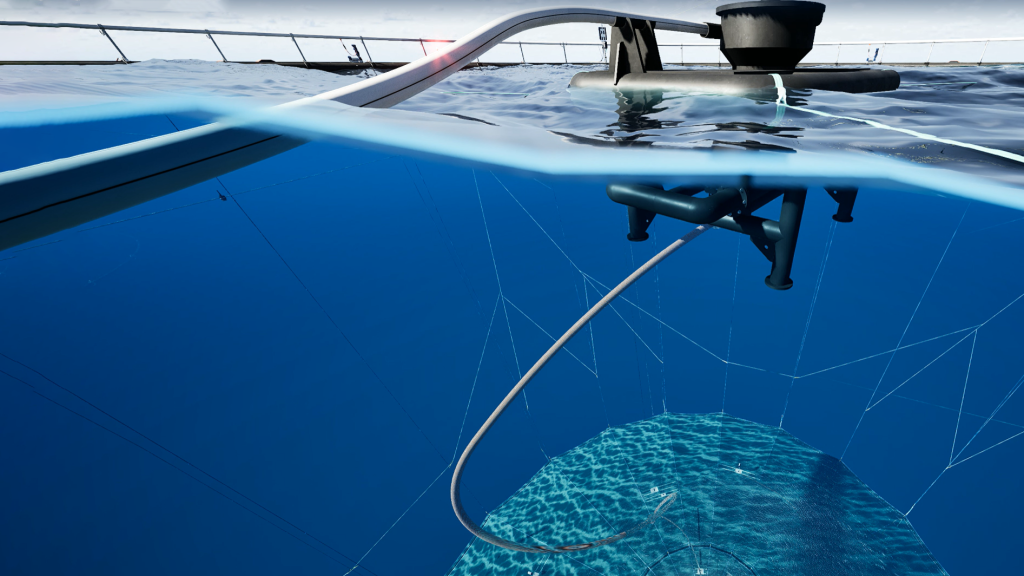
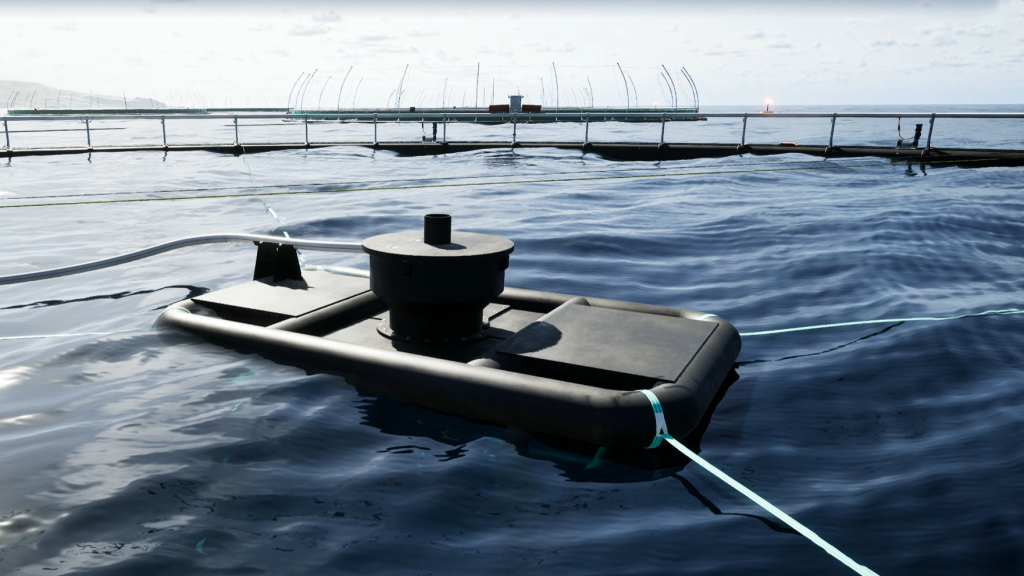
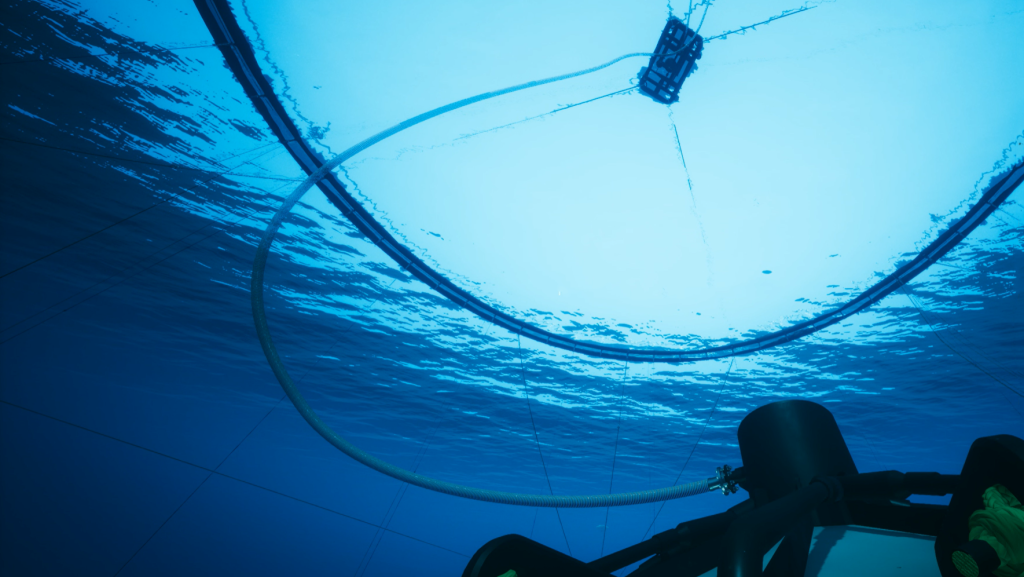
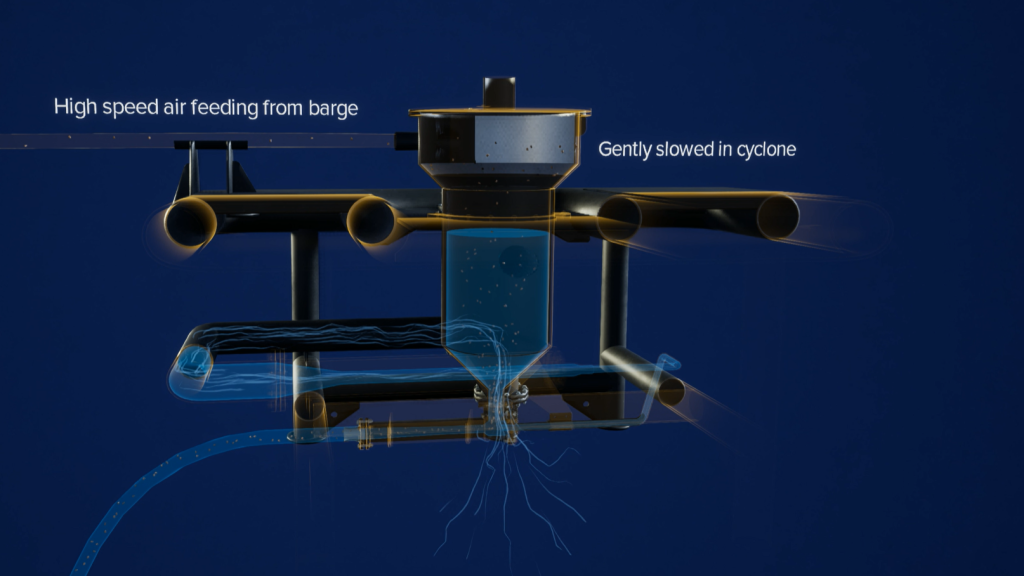
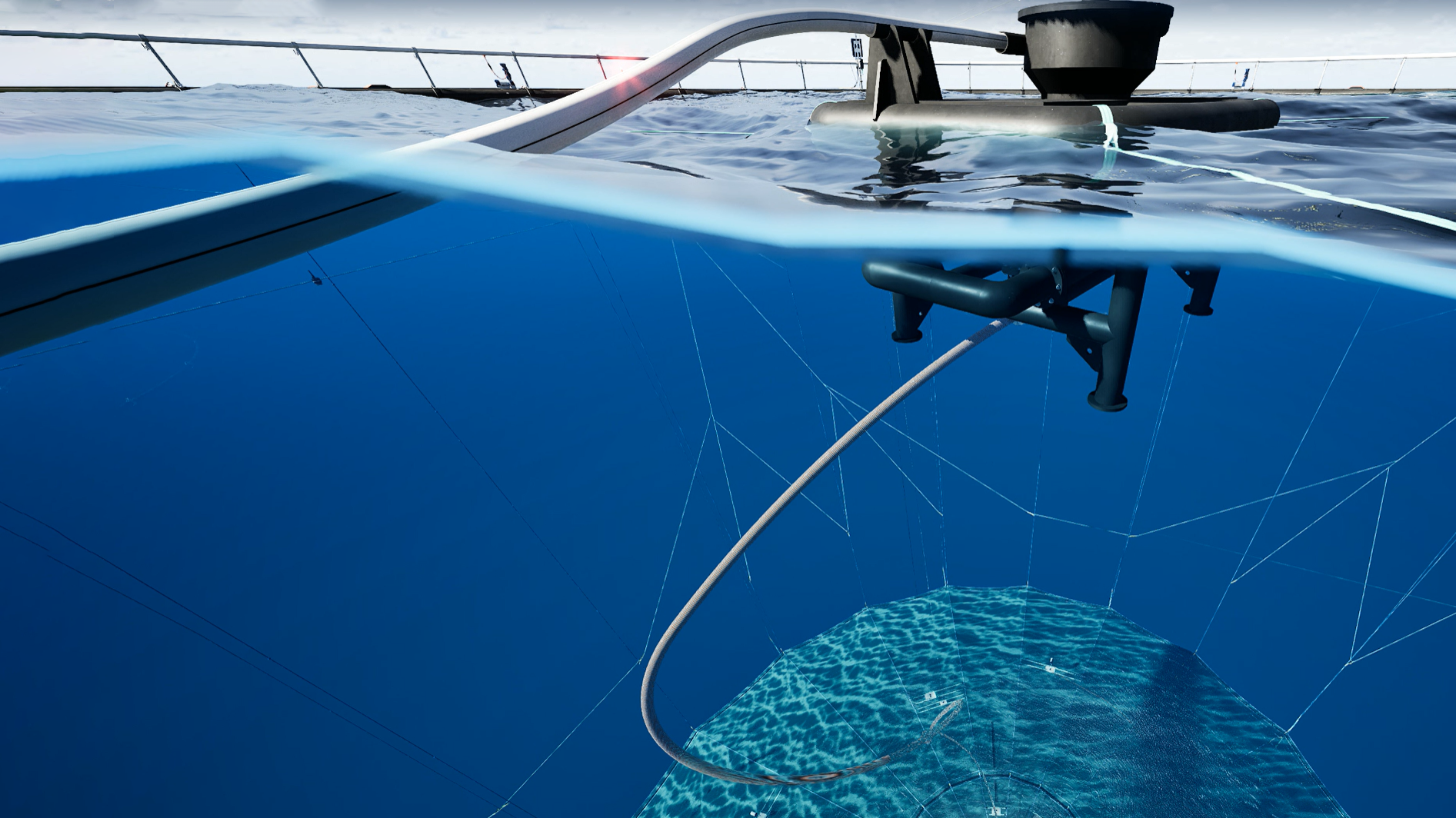
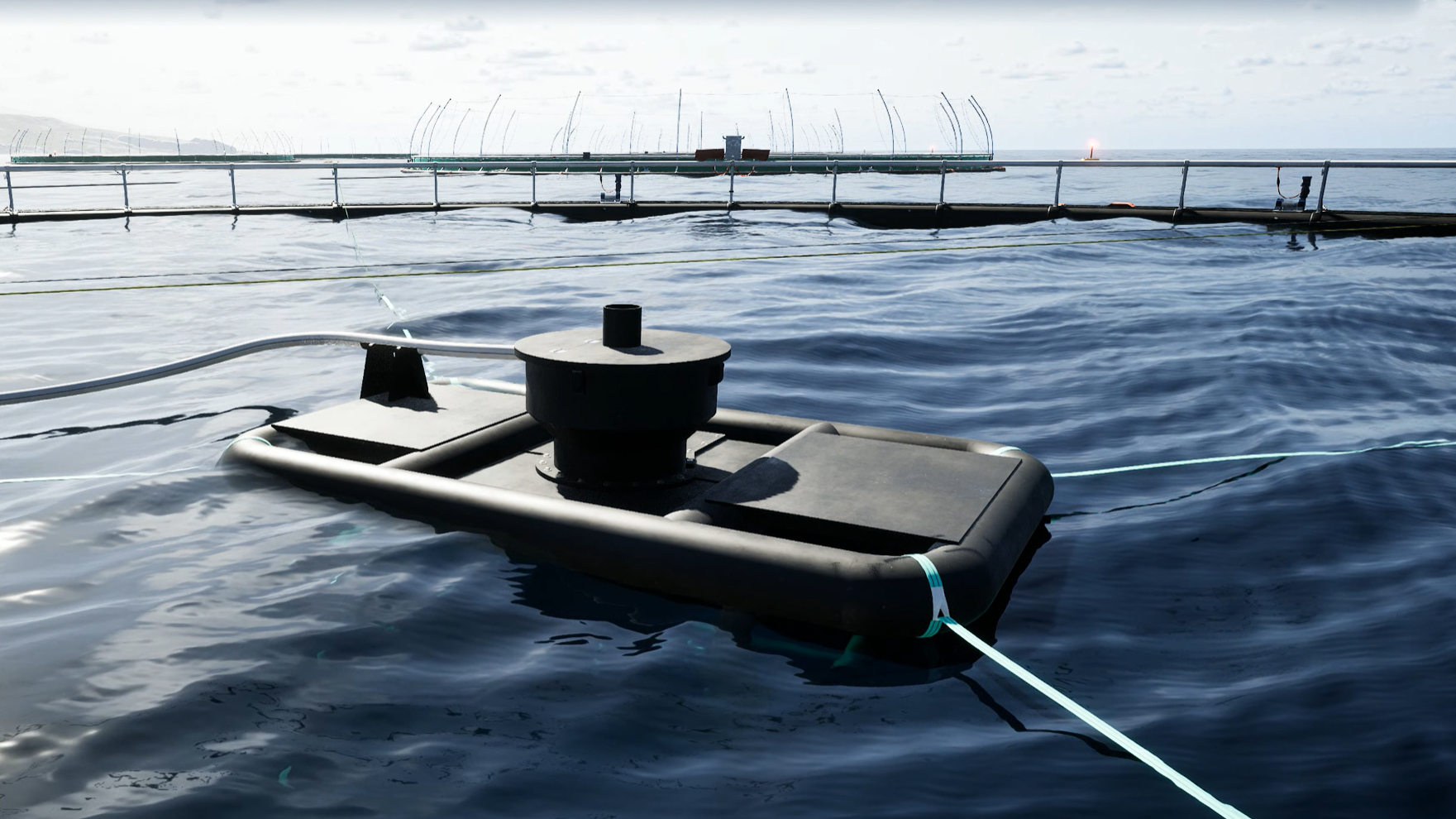
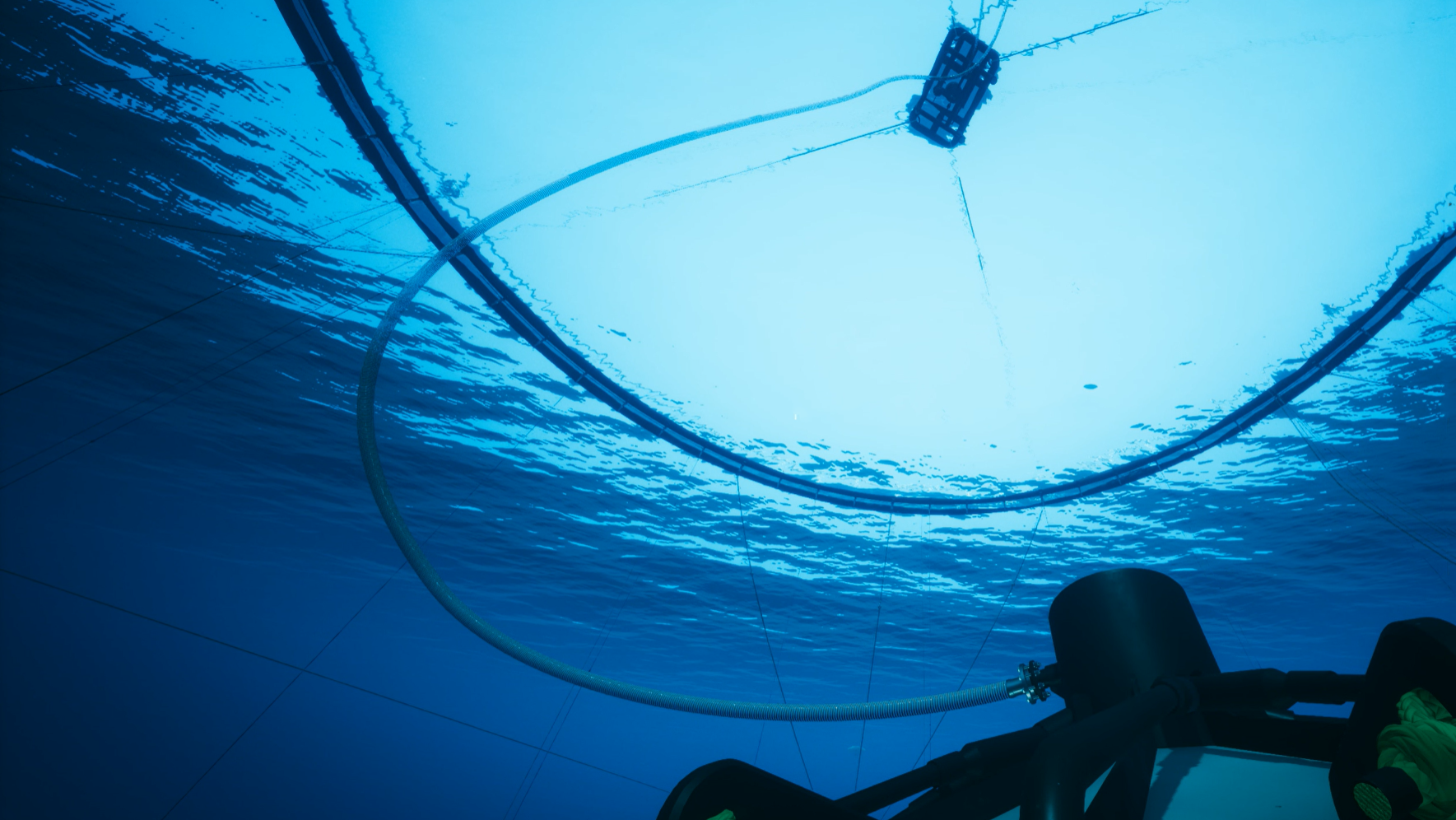
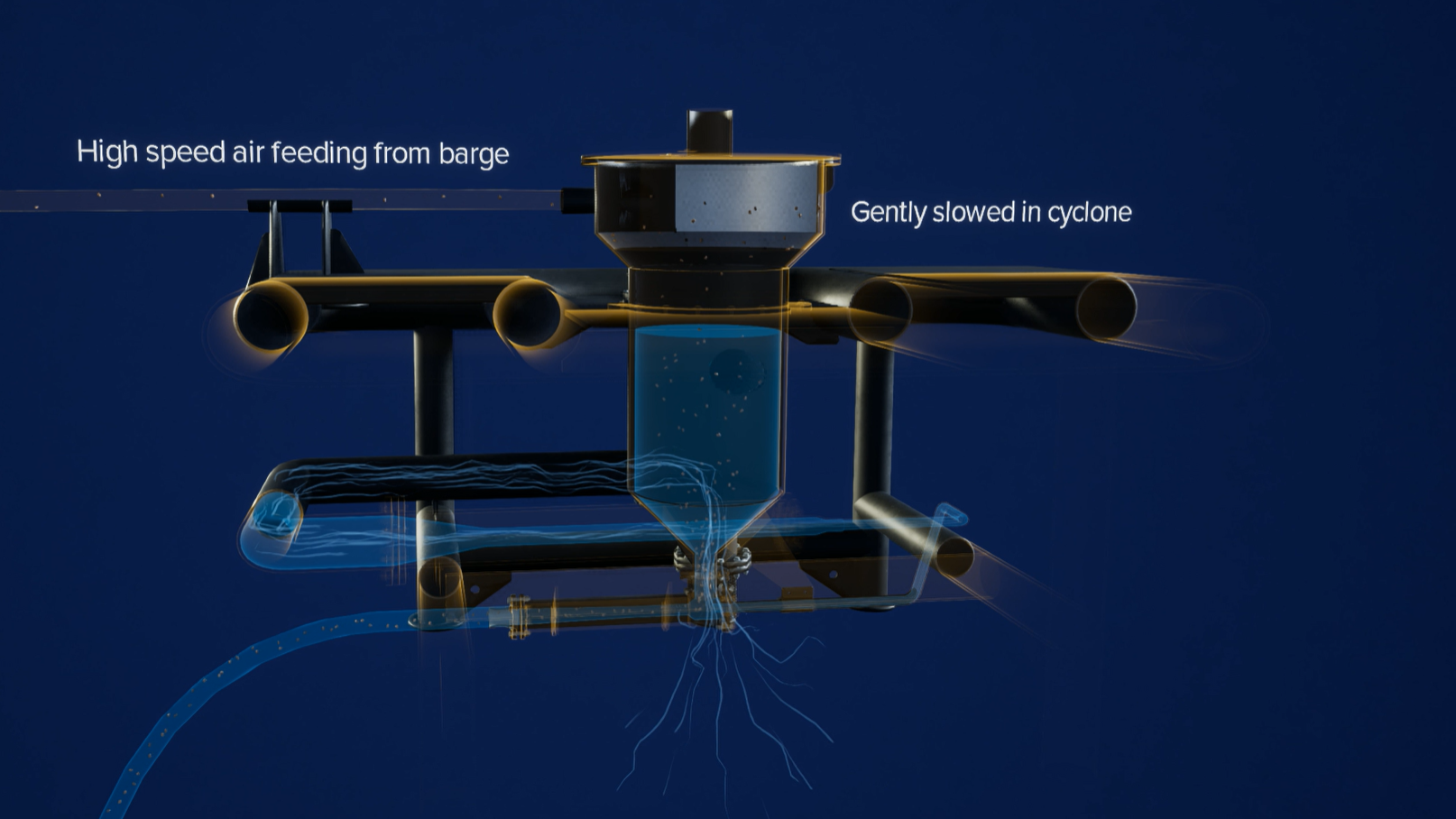
This retrofit module allows the existing pneumatic feeding system to handle the long-distance transport from the feed barge to the fish cage, while the transition to water takes place directly at the cage edge. The feed pellets are gently decelerated in a cyclone separator, transferred into water, and then pumped the short remaining distance down to the desired feeding depth. This means the customer can avoid rebuilding the feed barge while significantly reducing the time the pellets spend in water. The module is equipped with a submersible pump of up to 5.5 kW, operates with a water velocity of 1.5–2.0 m/s, utilizes PE hose distribution, and is controlled via FeedStation.
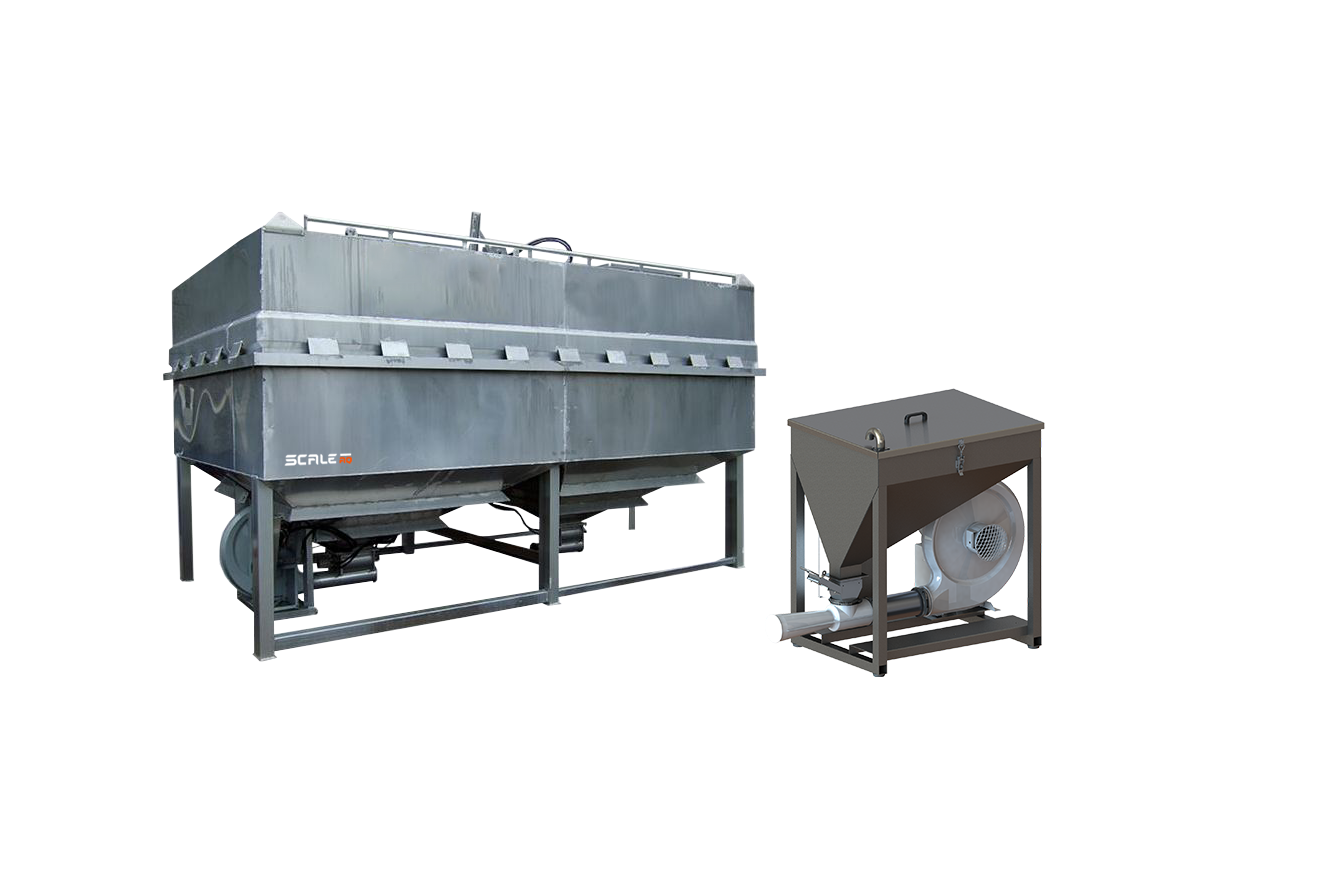
Existing pneumatic feeding system retained
Feed pellets are blown from the silo on the feed barge all the way to the cage edge. No modifications to the barge’s feeding system are required.
Cyclone separator decelerates the pellets
The high air velocity is reduced in a controlled manner to minimize impact forces and prevent pellet damage during the transition.
Transition from air to water
The pellets are transferred into the water phase directly at the fish cage, minimizing their time in water.
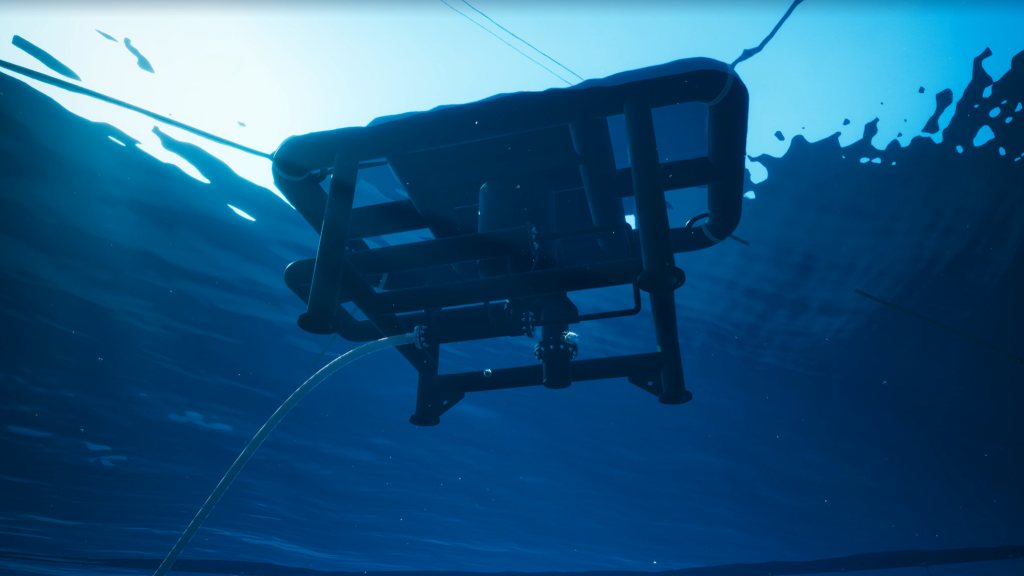
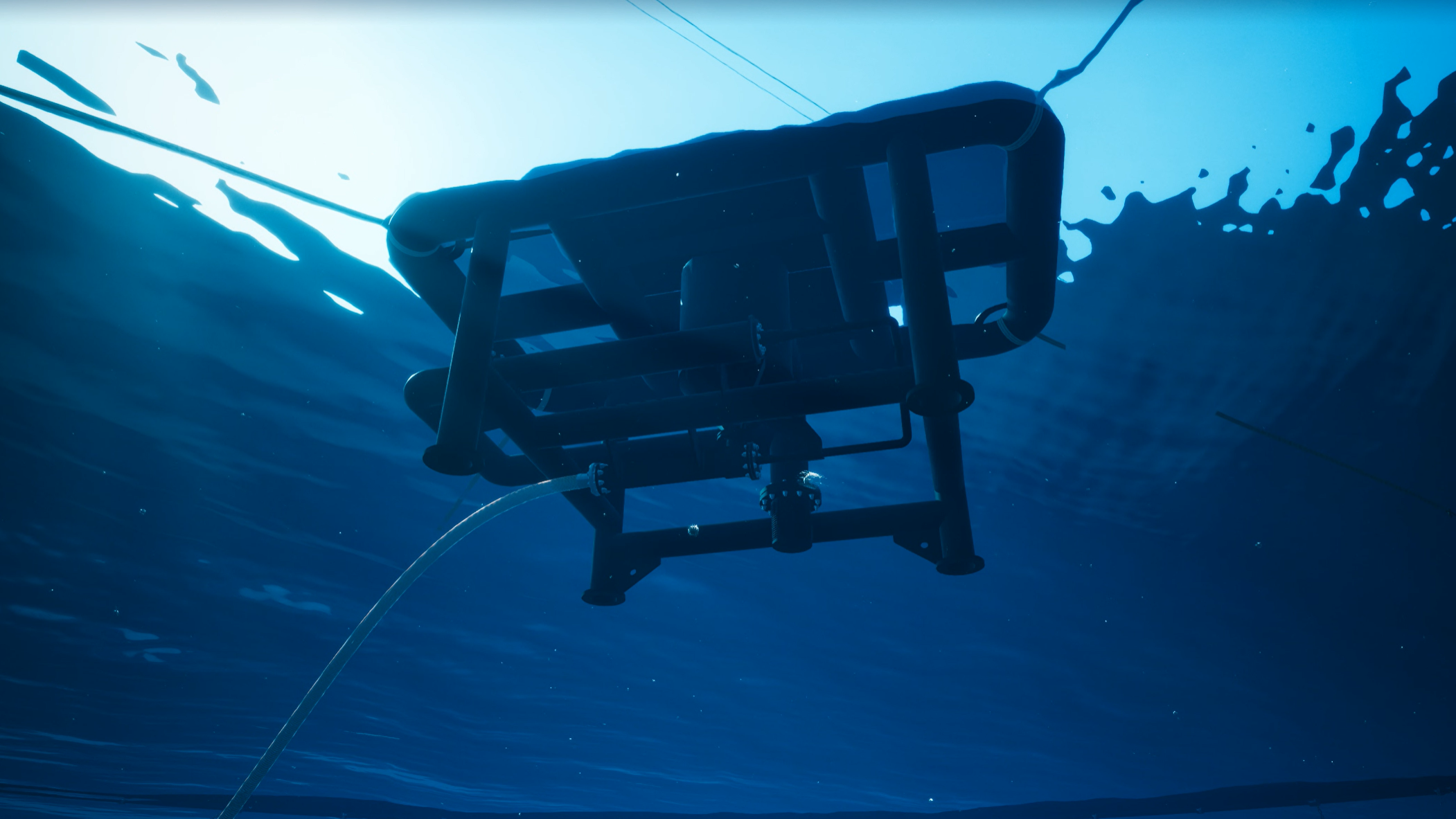
Submersible pump establishes the water flow
A submersible pump with a maximum power rating of 5.5 kW (Consumption ca 3-3,5kw) transports the pellets downward at a velocity of 1.5–2.0 m/s.
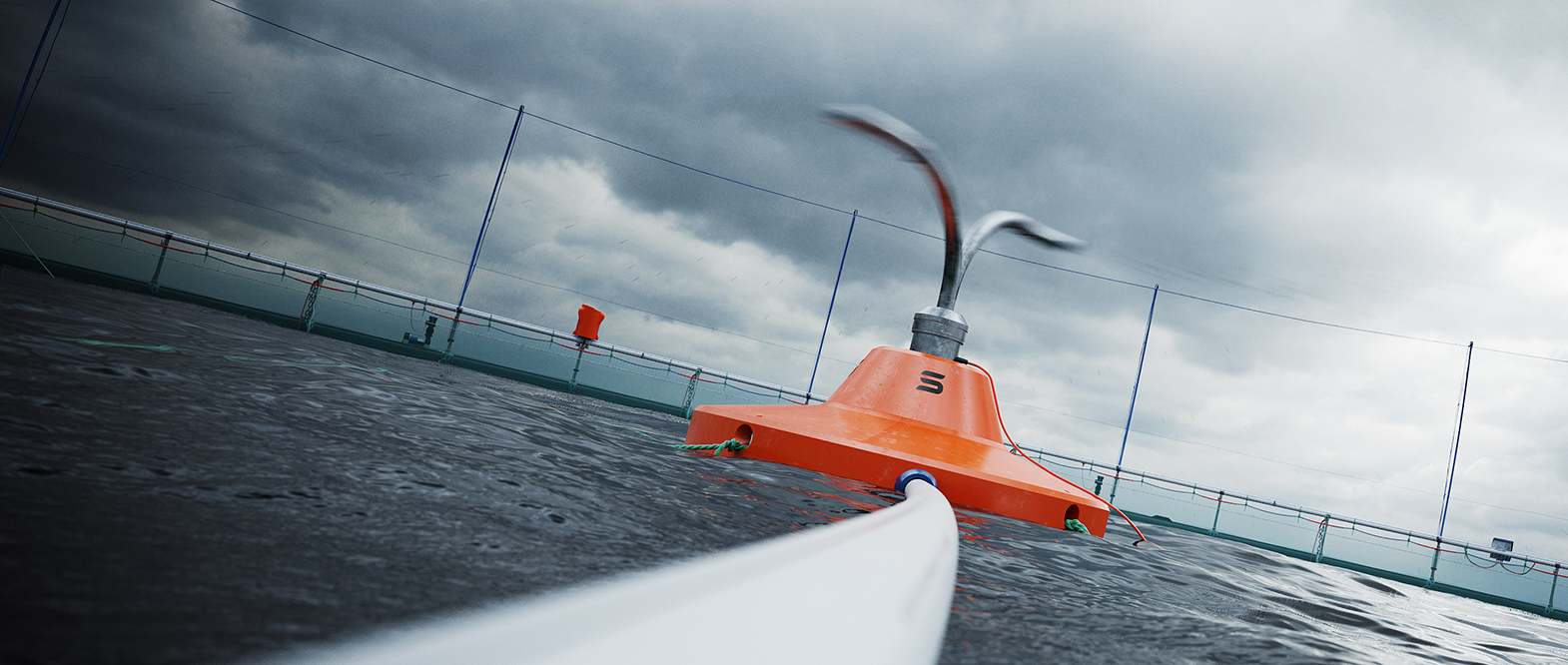
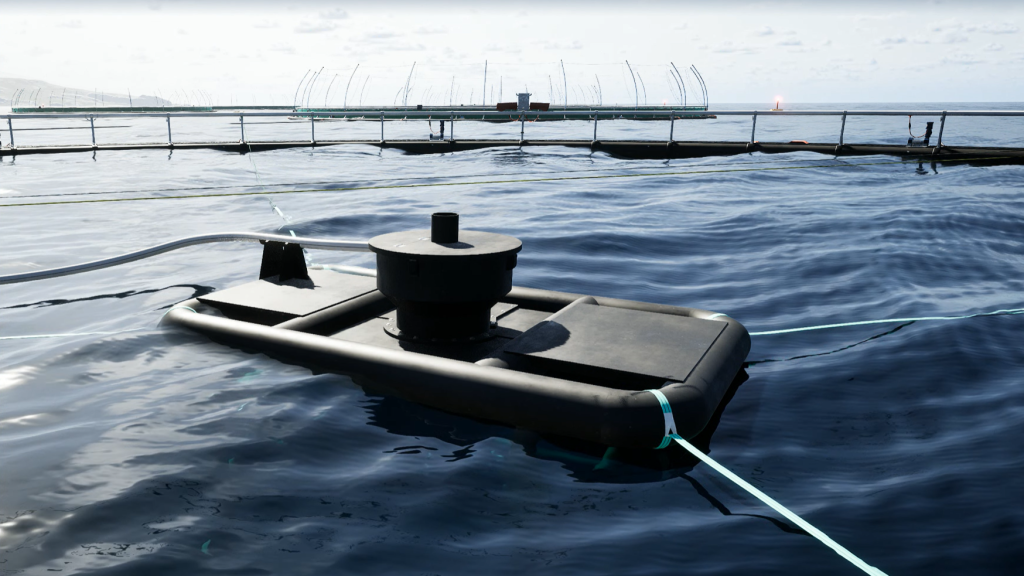
PE float supports the module
The PE float provides buoyancy and stability at the cage edge.
FeedStation controls the operation
Start/stop functions and operational control are integrated into the familiar FeedStation user interface. The control cabinet can communicate wirelessly with the feed barge via the camera network.
Why is shorter time in water a critical advantage?
- Reduced Nutrient Loss
Measurements show that reducing the time pellets spend in water helps minimize phosphorus and nitrogen leaching, most likely also other ingredients in the pellet. - Enhanced Pellet Integrity
Pressure, turbulence, friction, and time spent in water can affect pellet structure, sinking rate, and nutritional content. - Improved Operational Response
By initiating waterfeeding transport at the cage, operators gain faster response times and better control over start and stop of the feeding, leading to less feed spills. - Fish Health and Welfare
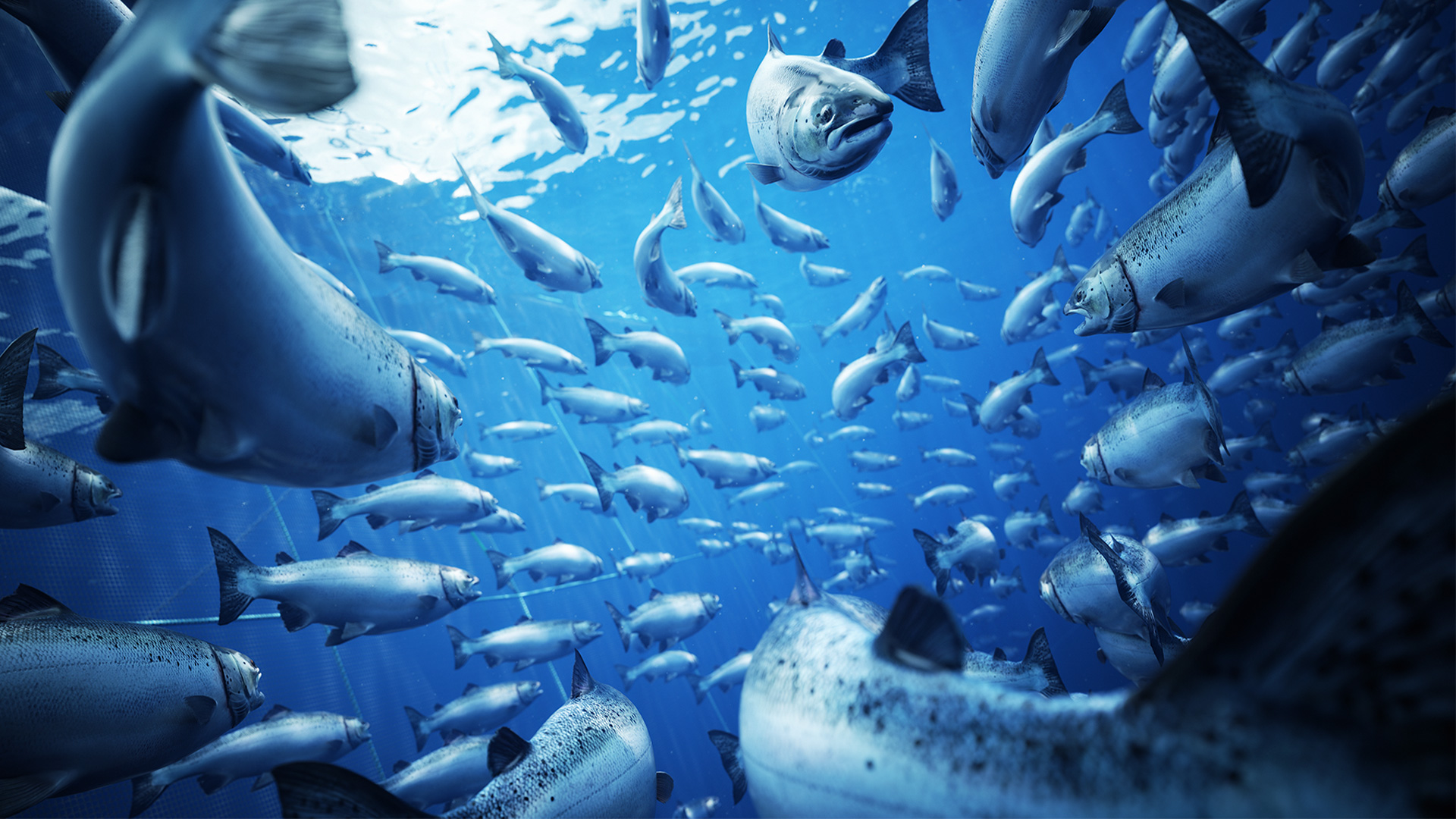
Maintaining pellet integrity and minimizing nutrient loss are important factors in supporting consistent growth and fish welfare.
We retain the fast and proven pneumatic transport system all the way to the cage, and use water only where it adds the greatest value: in the final, controlled delivery to the fish. This minimizes pellet residence time in water, improves start and stop response, and enables deep feeding without extensive modifications to the feed barge.