Concept description
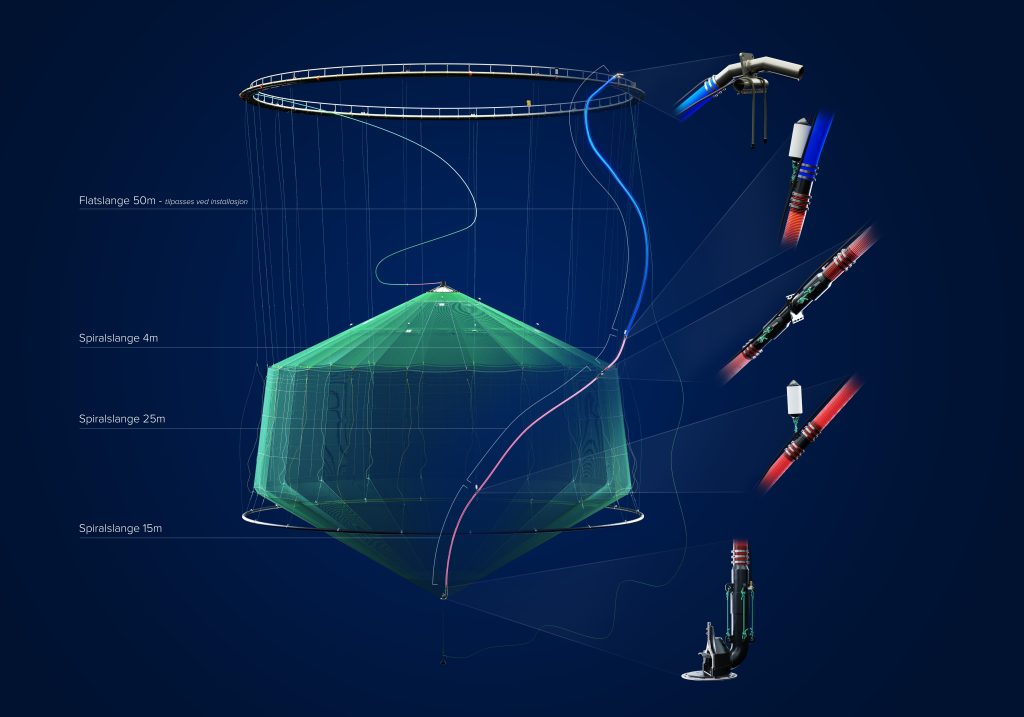
- Based on Midgard rings of 157/160 and 200 metres
- Net volume of approx. 44,000 m³ with a 157 m ring
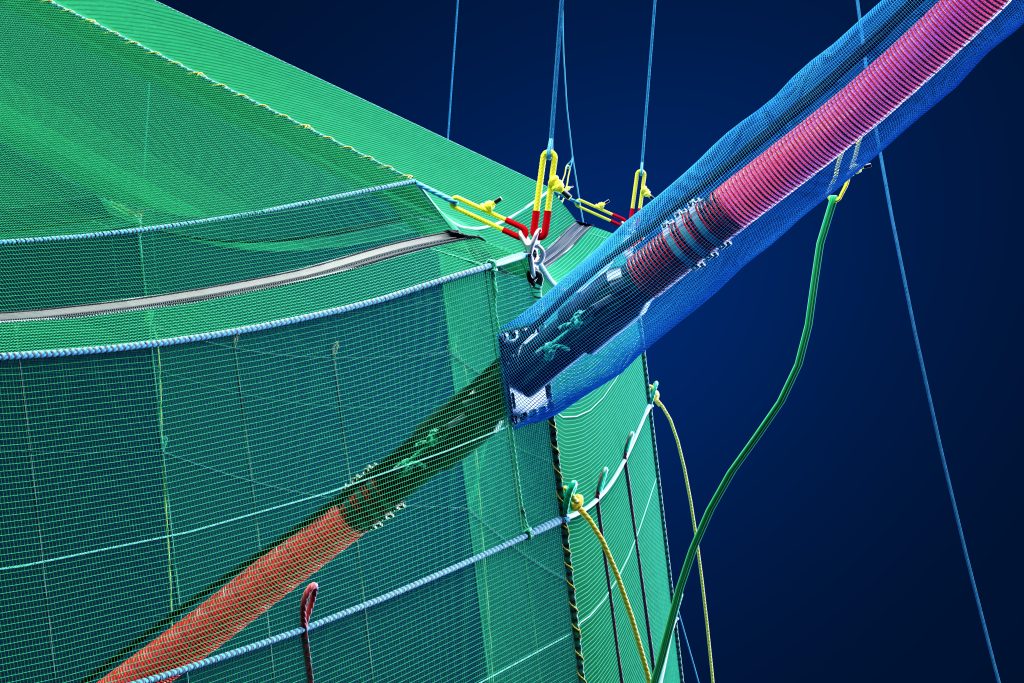
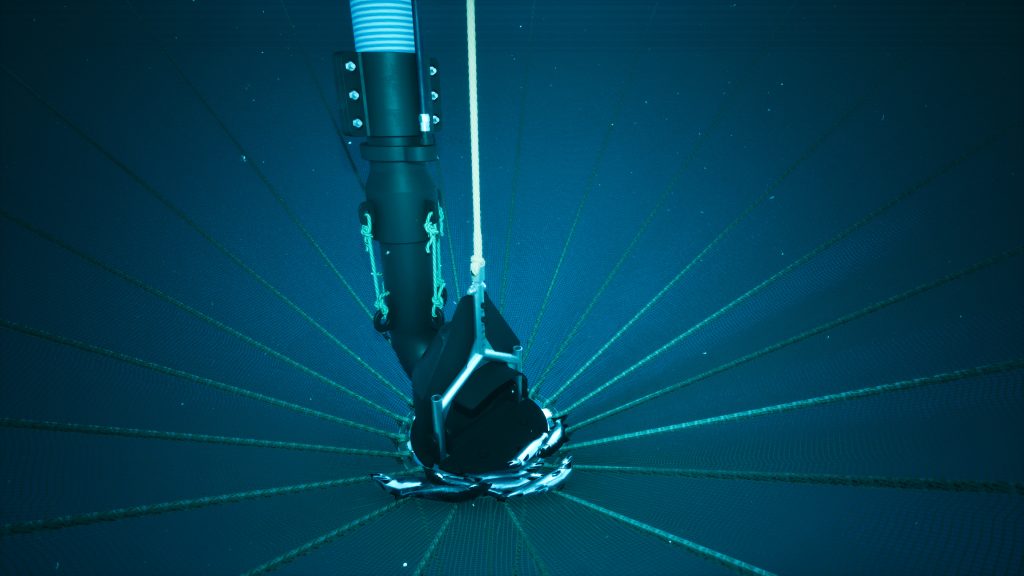
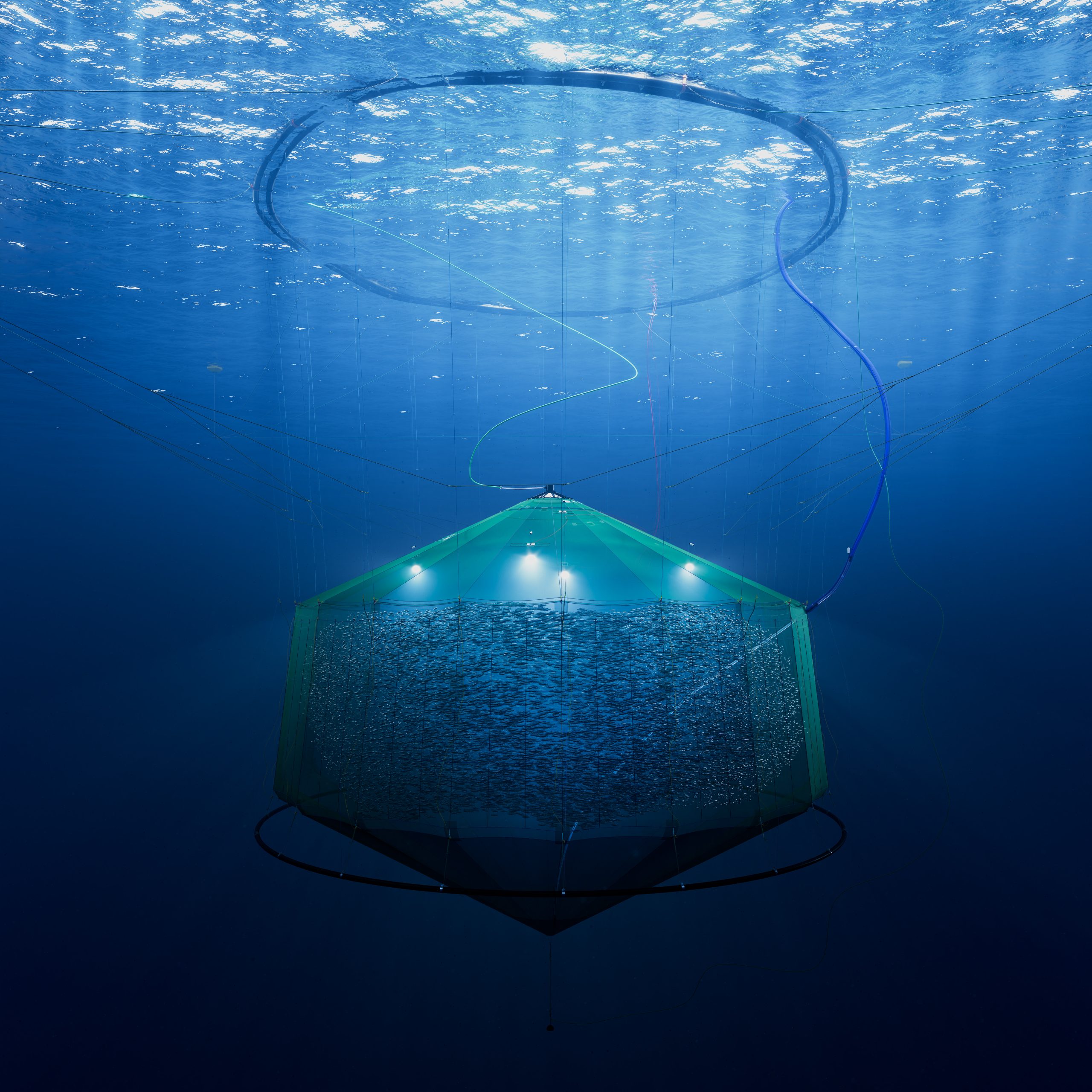
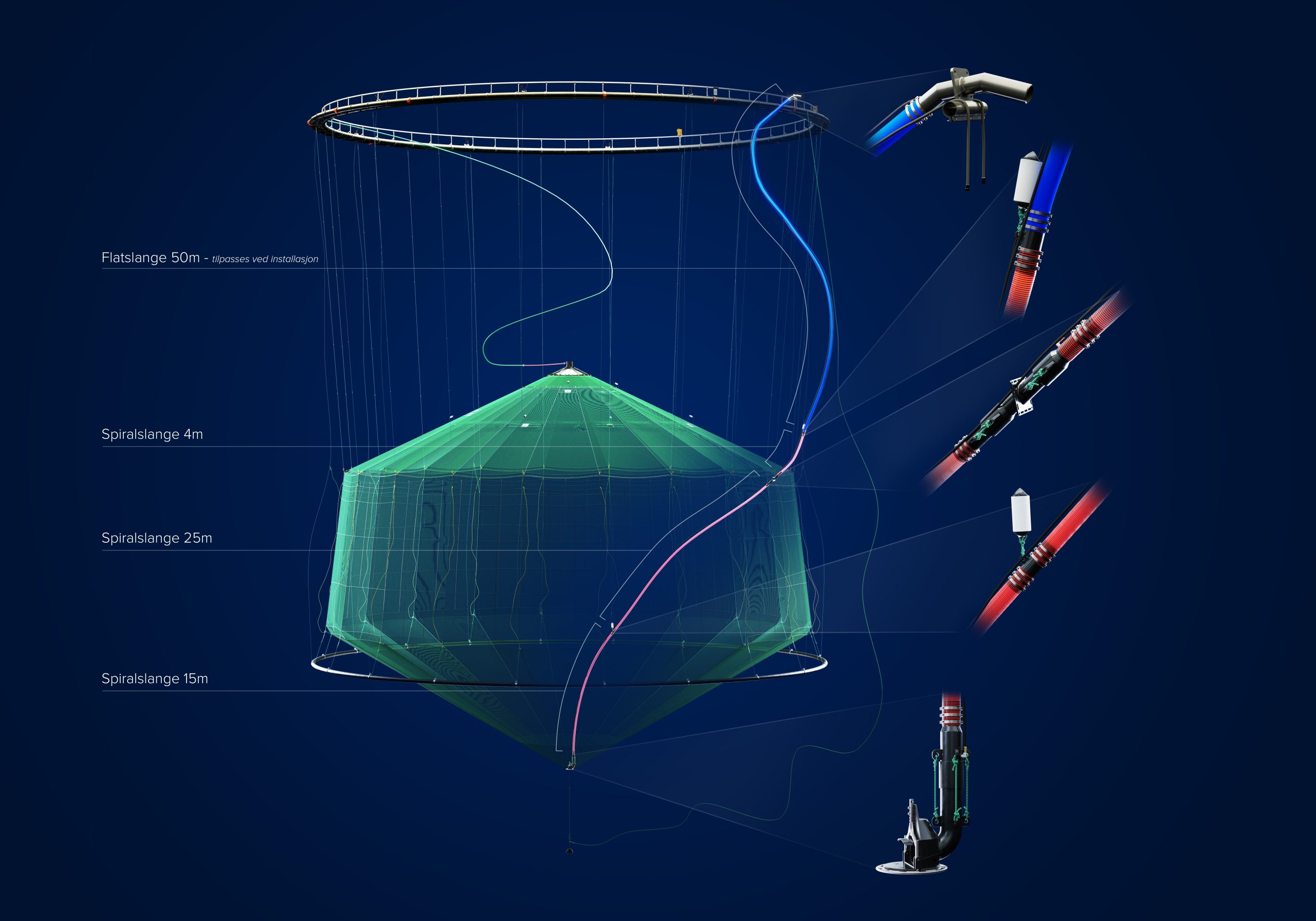
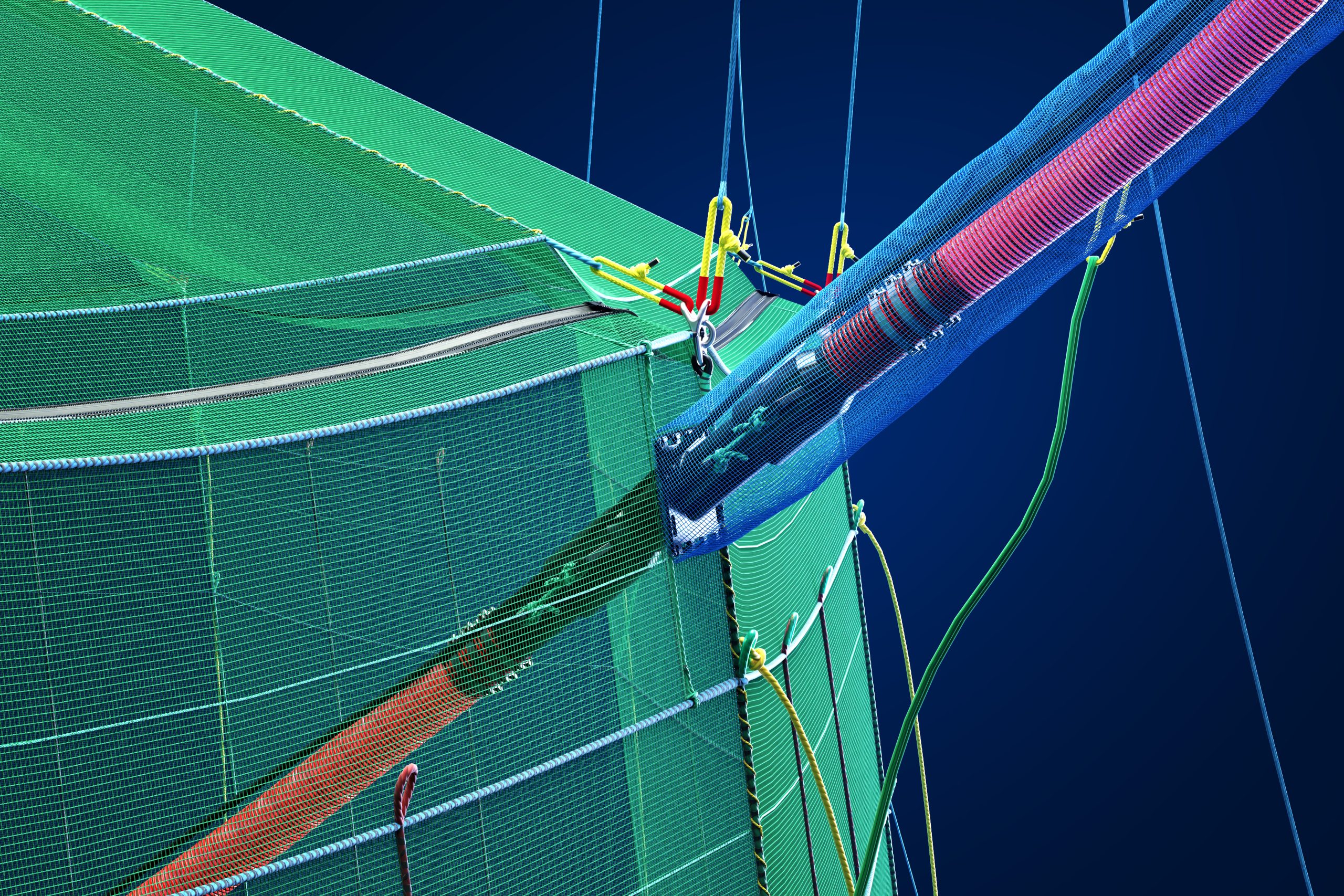
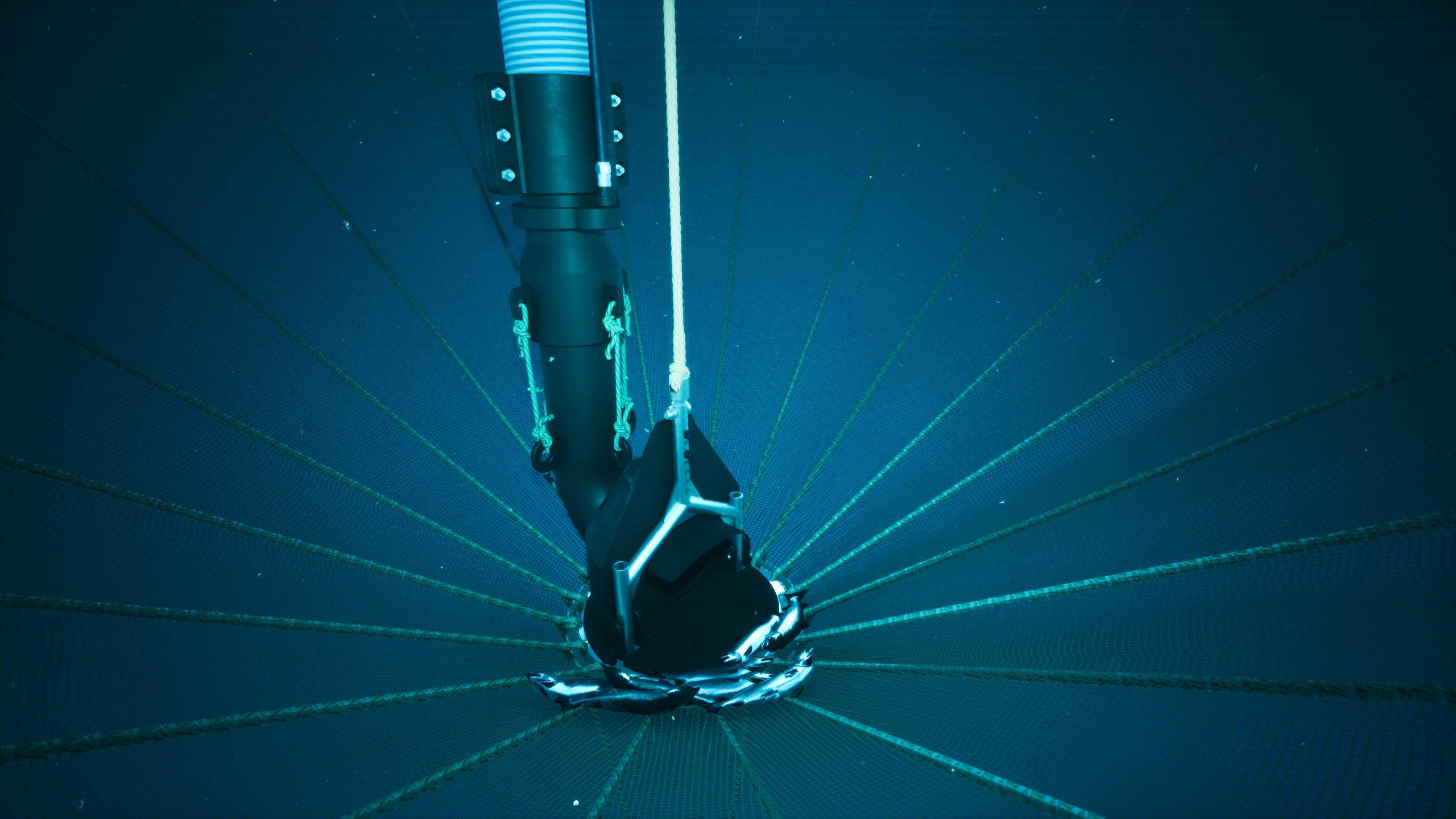
- Air dome integrated into the net roof, allowing the salmon to fill their swim bladders and be fed through the dome
- Tested in SINTEF’s Ocean Basin and certified for Hs 4.99 m and currents of up to 1.35 m/s
- Suitable for exposed sites
- Can be operated at the surface as a standard Midgard net when needed
- Integrated mortality removal system
- Cameras and sensors for monitoring the water environment and fish welfare
- LED lighting
What is submerged farming?
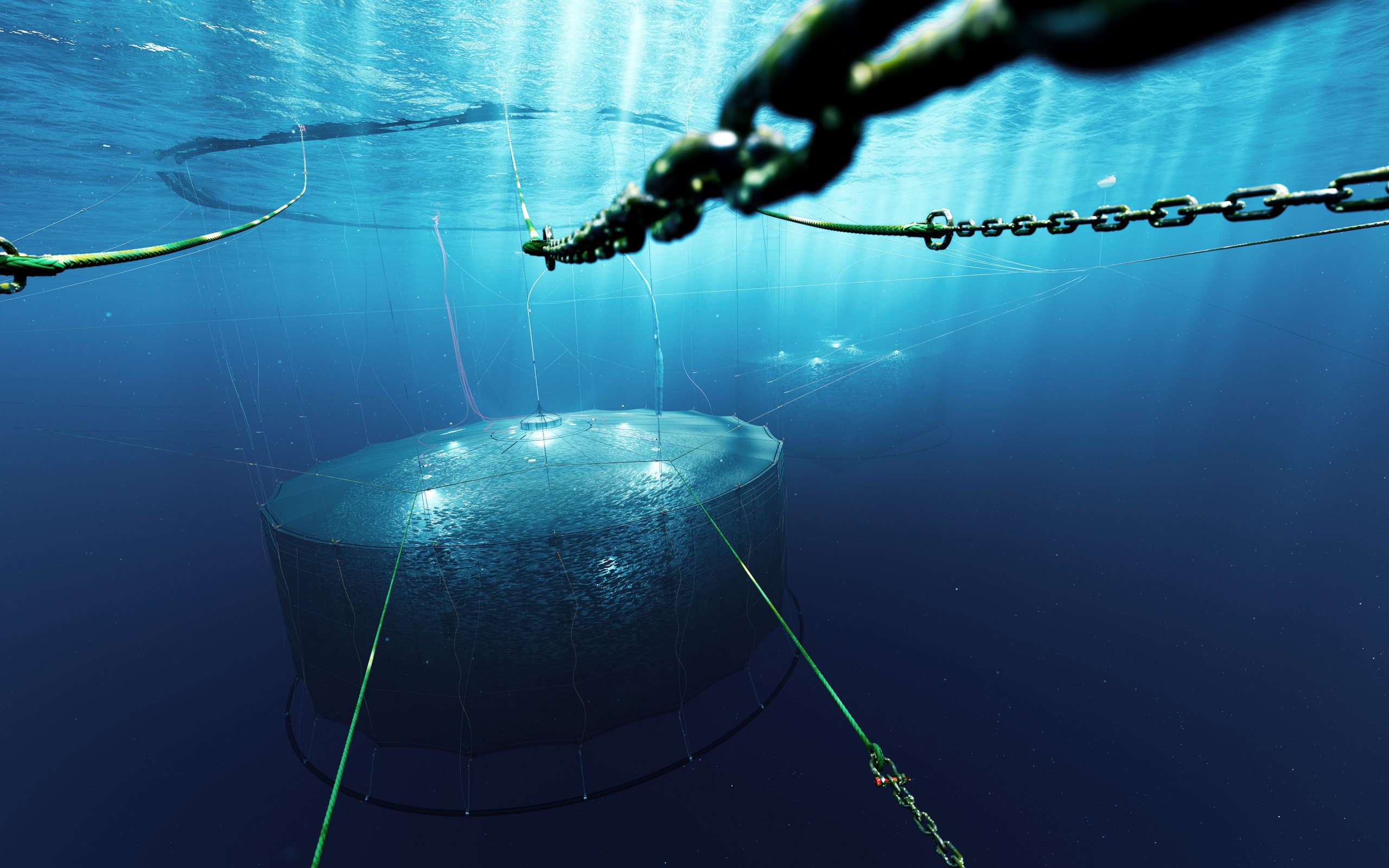
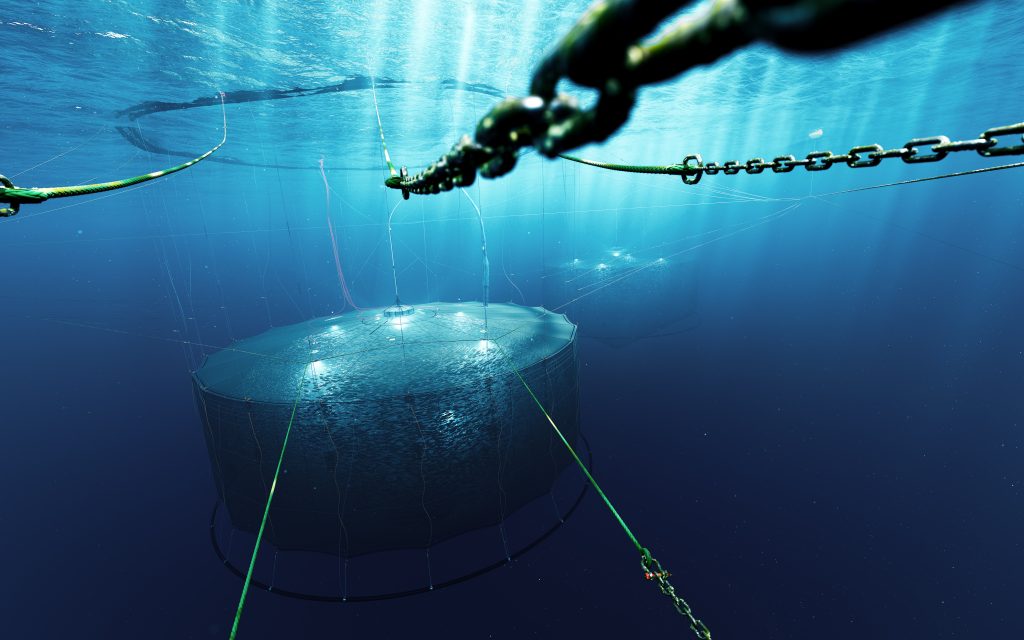
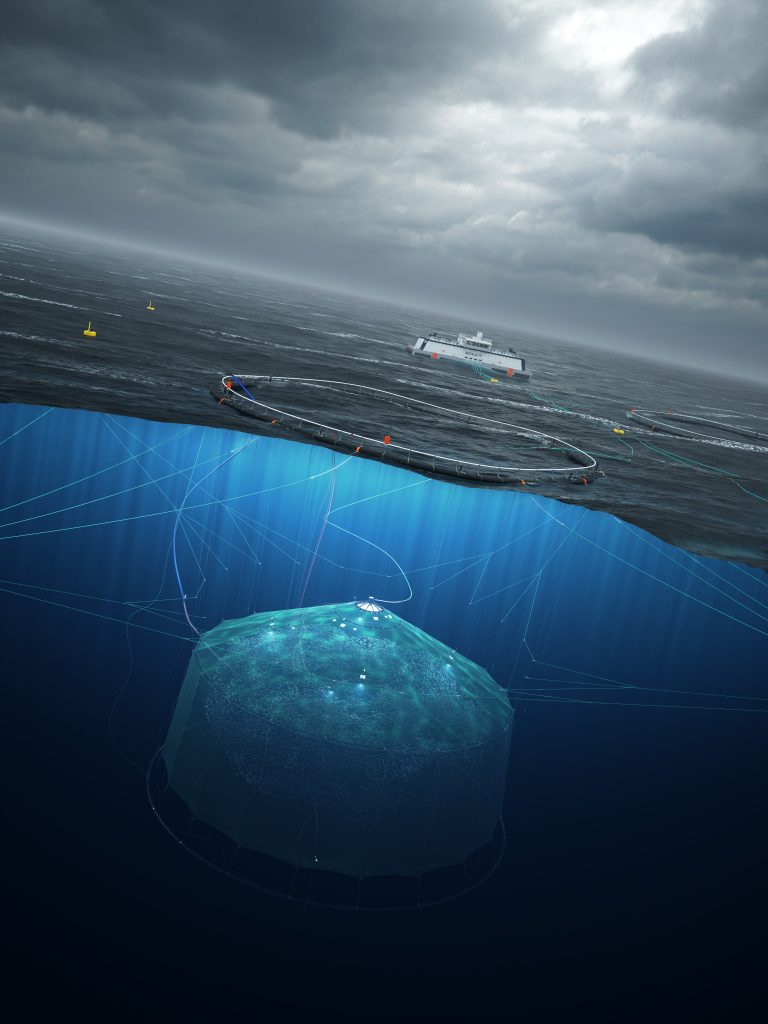
Submerged farming means lowering the net below the sea surface for all or part of the production cycle. The infective larvae of sea lice stay mainly in the upper water layers. When the net sits deeper, the fish have less contact with lice, which can reduce the need for delousing.
Deeper water layers also give more stable temperatures throughout the year and less exposure to waves. This makes submerged systems a good option for exposed sites, where surface pens are under greater strain.
How Subsea System works
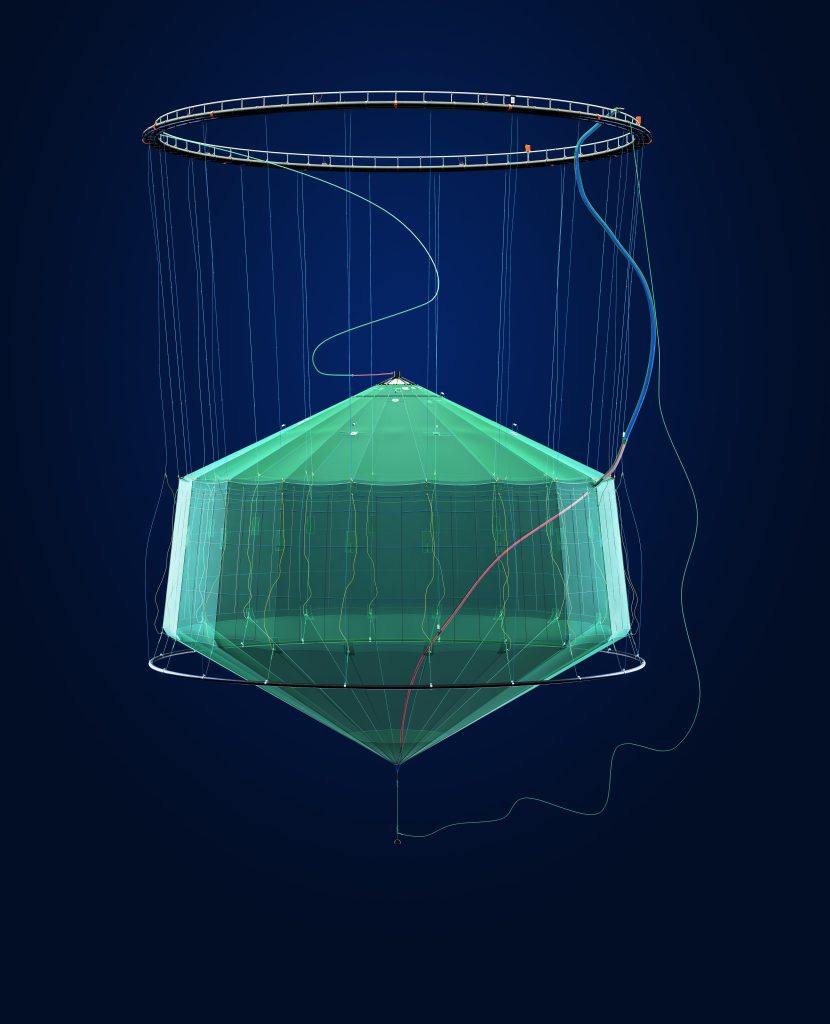
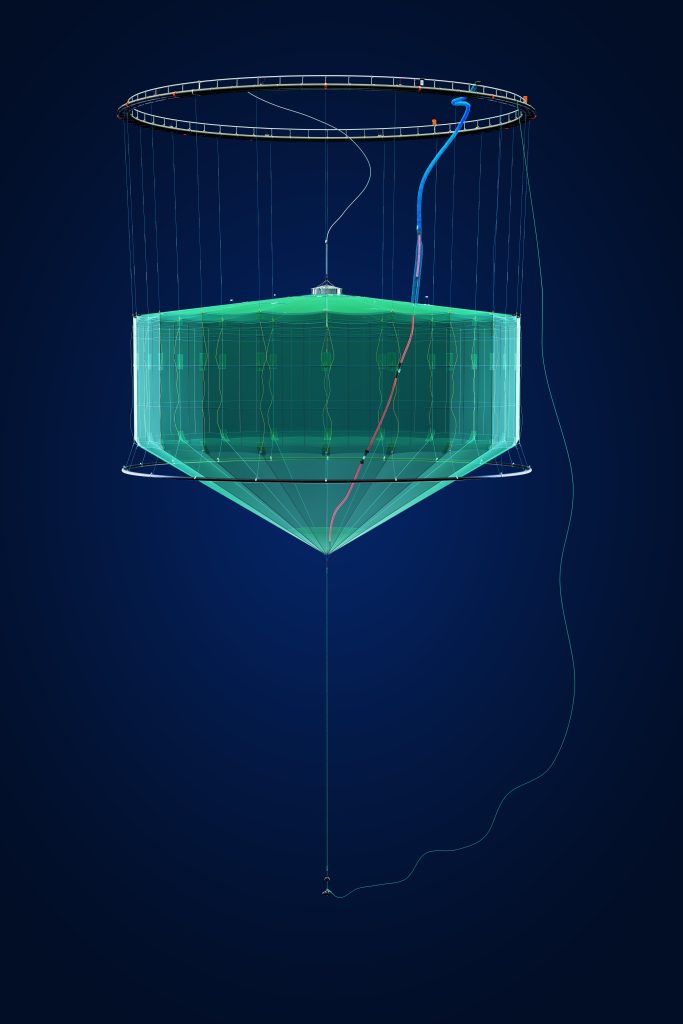
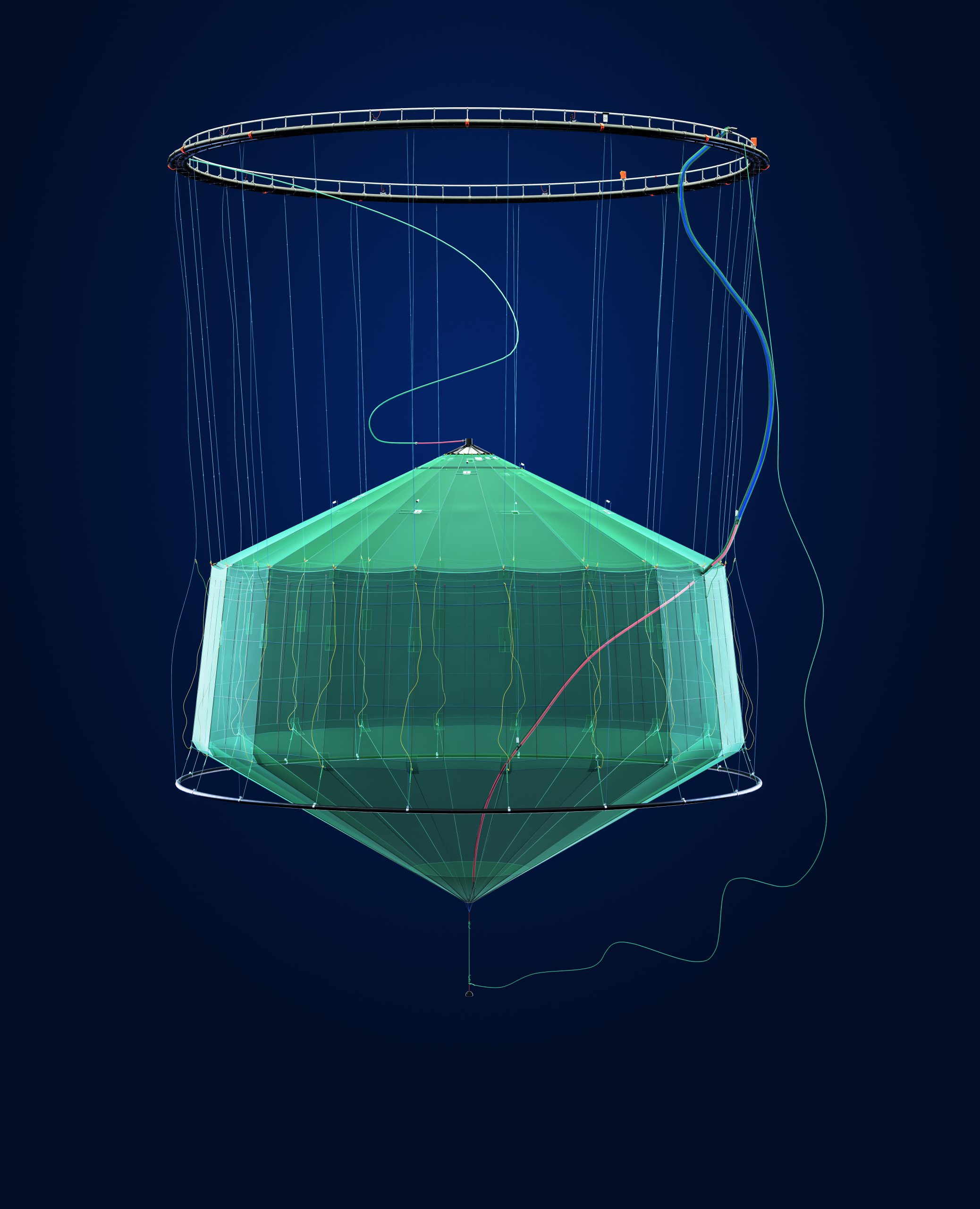
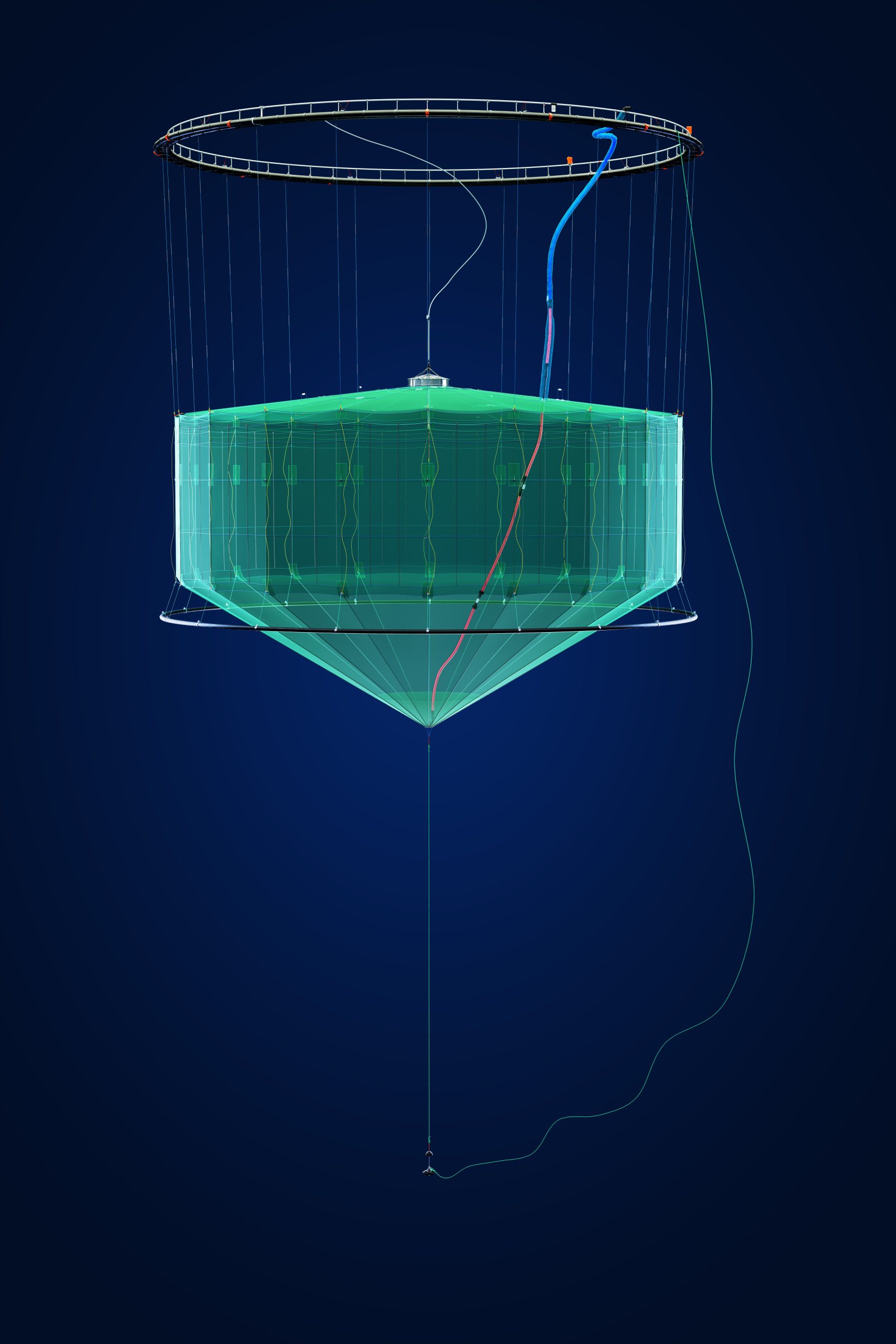
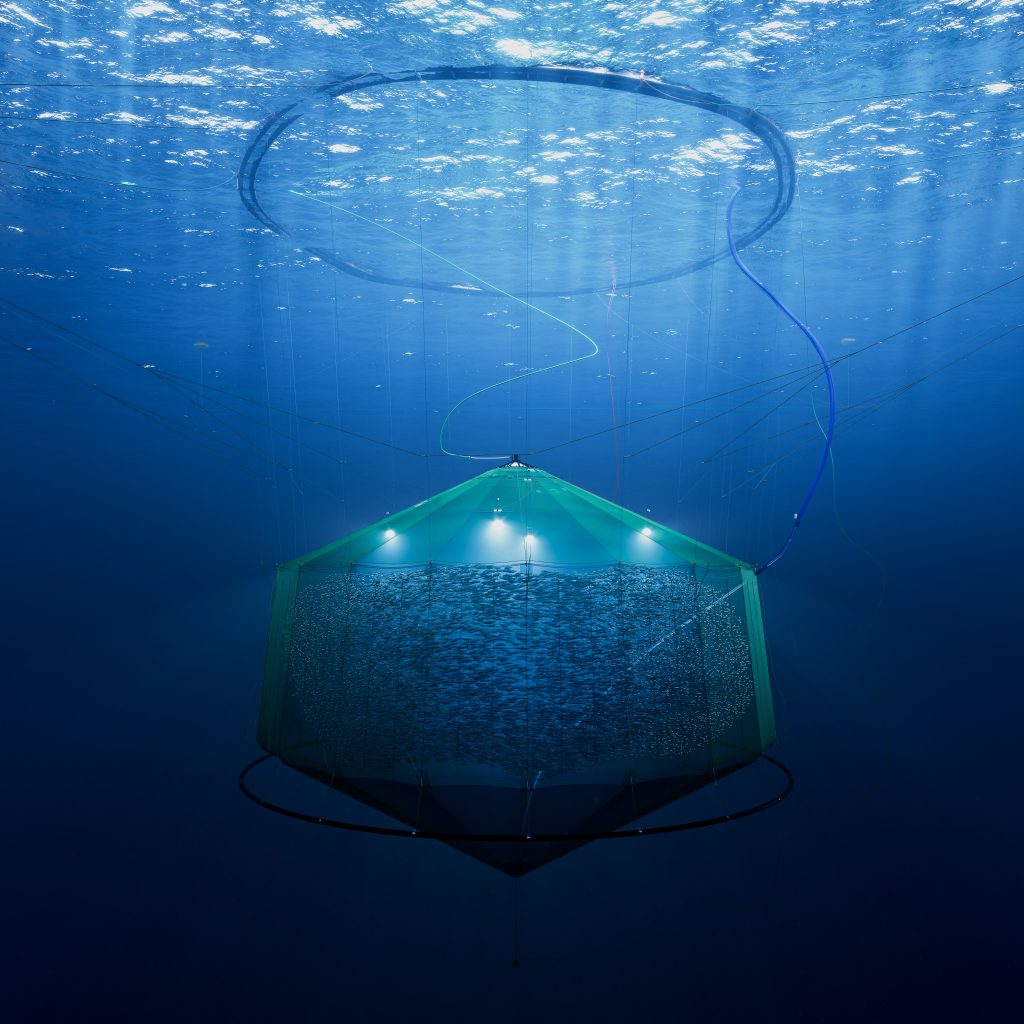
Subsea System is a submersible net built on the Midgard System. The net is lowered using winches and suspended from ropes, while the floating collar stays at the surface. The net roof has an air dome where the salmon can swim up and fill their swim bladders with air. Salmon need to fill their swim bladders, and in conventional farming they do this by swimming to the surface. When that option is taken away, the air dome becomes essential. Feed is delivered through the dome.


One submerged system – two versions
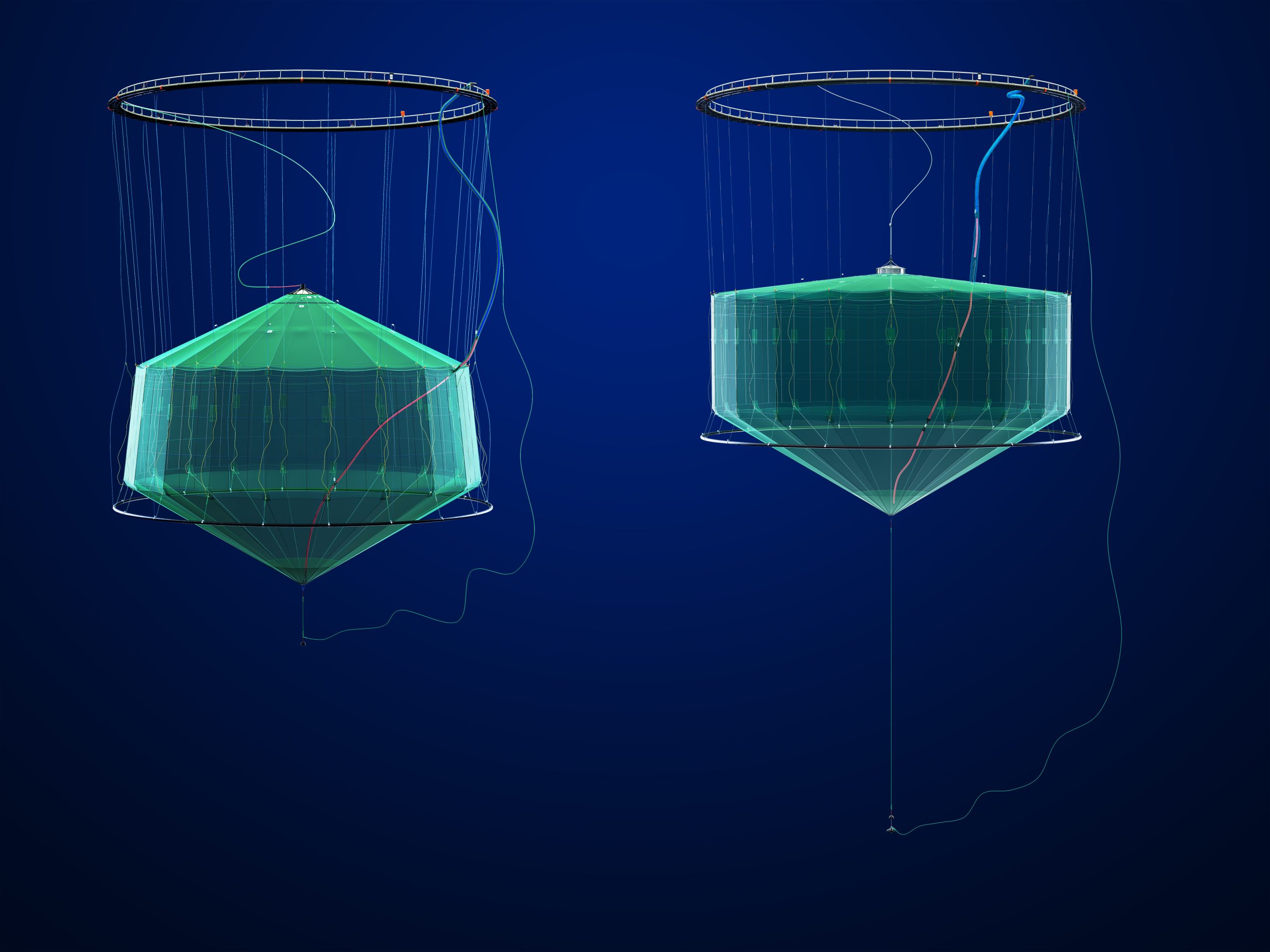
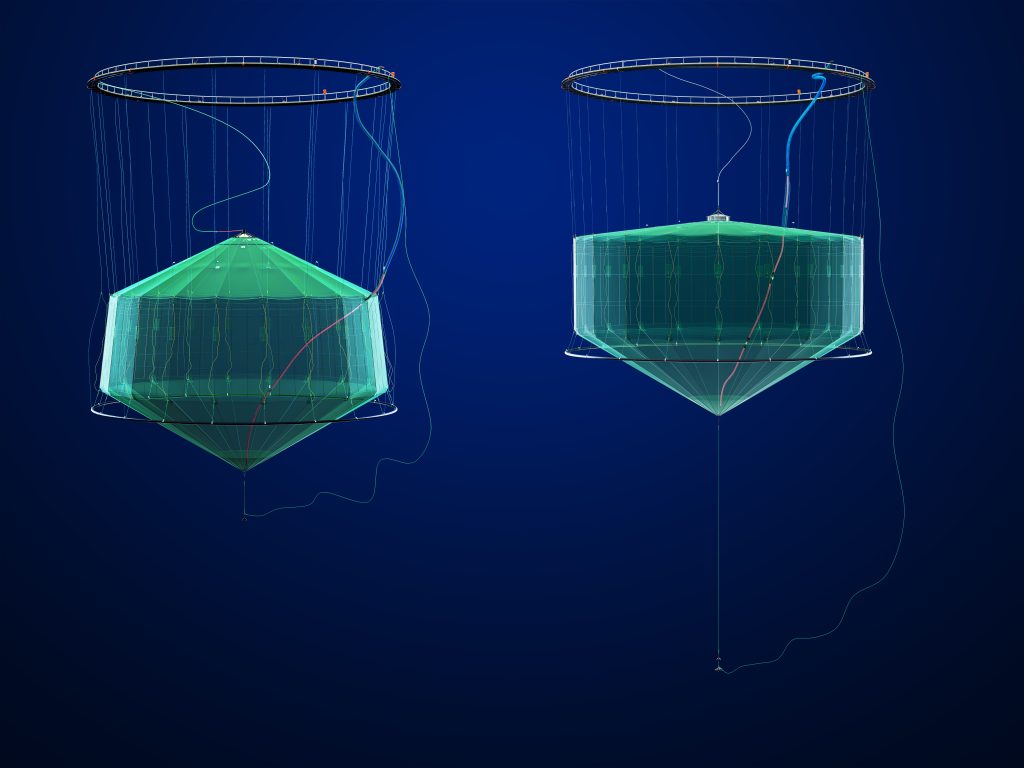
No two sites are the same. That’s why Subsea System comes in two versions that share the same basic principle and the same certification but have different strengths. Which one fits best depends on current conditions, the depth of the site and how you plan to operate.
Subsea 1.0 has an aluminium air dome, a centre rope between the dome and the bottom of the net, and a flat, well-tensioned net roof. It keeps the most volume in strong currents: 80% at 0.8 m/s. On the other hand, it needs heavier net weights and a deeper site, with at least 90 metres below the pen.
Subsea 2.0 has a PE air dome and no centre rope. It uses much lighter net weights, which can sit just below the bottom of the net, and needs 75 metres below the pen. This makes handling easier during delousing and opens up more sites. The dome can sit deeper, but the remaining volume in strong currents is somewhat lower.
Our advisers will help you work out which solution suits your site.
Proven technology in a new farming concept
Most of the components in Subsea System are existing ScaleAQ products that have been developed and tested over many years. Both versions have been model-tested in SINTEF’s Ocean Basin and can handle extreme sea conditions. They are certified for a significant wave height of 4.99 metres and currents of 1.35 m/s.
Development started in 2015 as part of the development licences. Since then, the solution has gone through analysis, tank testing, sea trials without fish and finally operation with fish. On 27 May 2024, fish were stocked in a Subsea System for the first time, with almost 200,000 fish in the pen.
Frequently asked questions
What is a submerged pen?
A pen where the net is lowered below the surface, so the fish sit deeper than the lice belt and the waves.
How deep does Subsea System sit?
The air dome sits at approx. 22 metres in Subsea 1.0 and approx. 25 metres in Subsea 2.0.
How do salmon get air in a submerged pen?
Through the air dome in the net roof, where the salmon can fill their swim bladders.
What is the difference between Subsea 1.0 and 2.0?
Subsea 1.0 keeps the most volume in strong currents. Subsea 2.0 is easier to handle and needs less depth at the site.